
Mental Health Awareness Week 2026 is built around three big ideas: Action. Preventative Action. Shared Responsibility. Which, if you squint, reads exactly like the brief for a Tough Mudder event. Funny that.
Do Something (Literally Anything)
When your head’s a mess, the instinct is to wait until you feel ready to move. Spoiler: that day doesn’t come on the sofa.
Action, even imperfect, cold, muddy, slightly panicked action interrupts the loop. Signing up for a Tough Mudder doesn’t require you to be okay. It just requires you to show up. The obstacles do the rest. There’s a reason “motion” is on the mental health agenda, your brain is not separate from your body, and getting both of them over a 10-foot wall at 8am on a Saturday is, clinically speaking, quite a lot better than doomscrolling until noon.

Build the Habit Before You Need It
Here’s the uncomfortable truth about mental health: most people only start thinking about it when things have already gone wrong.
Preventative care, building resilience before the wheels come off is the real move. Training for a Tough Mudder gives you exactly that structure: regular physical challenge, progressive discomfort you learn to manage, and a non-negotiable date in the diary that isn’t “dentist”. The cold water, the fatigue, the moments where you genuinely don’t know if your legs will cooperate, these are low-stakes rehearsals for high-stakes moments. You’re building a nervous system that knows it can handle things, because it already has.

You Can’t Do This Alone (And You Shouldn’t Have To)
Shared responsibility is central to this years mental health message, not in a corporate-poster way, but in the sense that we’ve all been sold the idea that struggling is a private matter. It isn’t. Tough Mudder has exactly zero solo finish lines and isn’t designed for lone wolves; it’s designed for the person in front of you who needs a hand up the Pyramid Scheme, and for you to realise you needed to give it as much as they needed to receive it. That exchange, unglamorous, covered in mud, probably involving some swearing, is what collective care actually looks like in practice.

The Bottom Line
Tough Mudder won’t fix everything. It’s not therapy, it’s not medication, and we’re not pretending otherwise. But it is action when inaction is easiest. It is preventative work when the world tells you to wait for a crisis. And it is, stubbornly and reliably, something you do with other people who are also out there trying. That’s not nothing. That’s quite a lot, actually.

Find your event. Find your team. Get in the mud. Run for a cause.
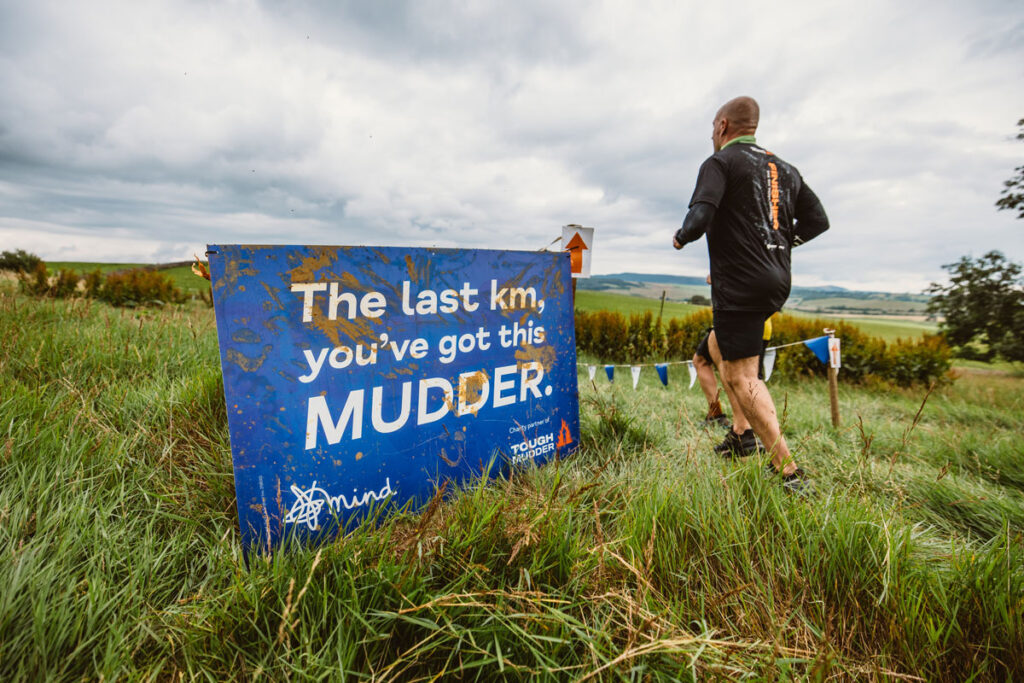
If you’re struggling with your mental health, please reach out to a professional, your GP, Samaritans (call: 116 123), or Mind at mind.org.uk
Tough Mudder is for everyone, and so is asking for help.