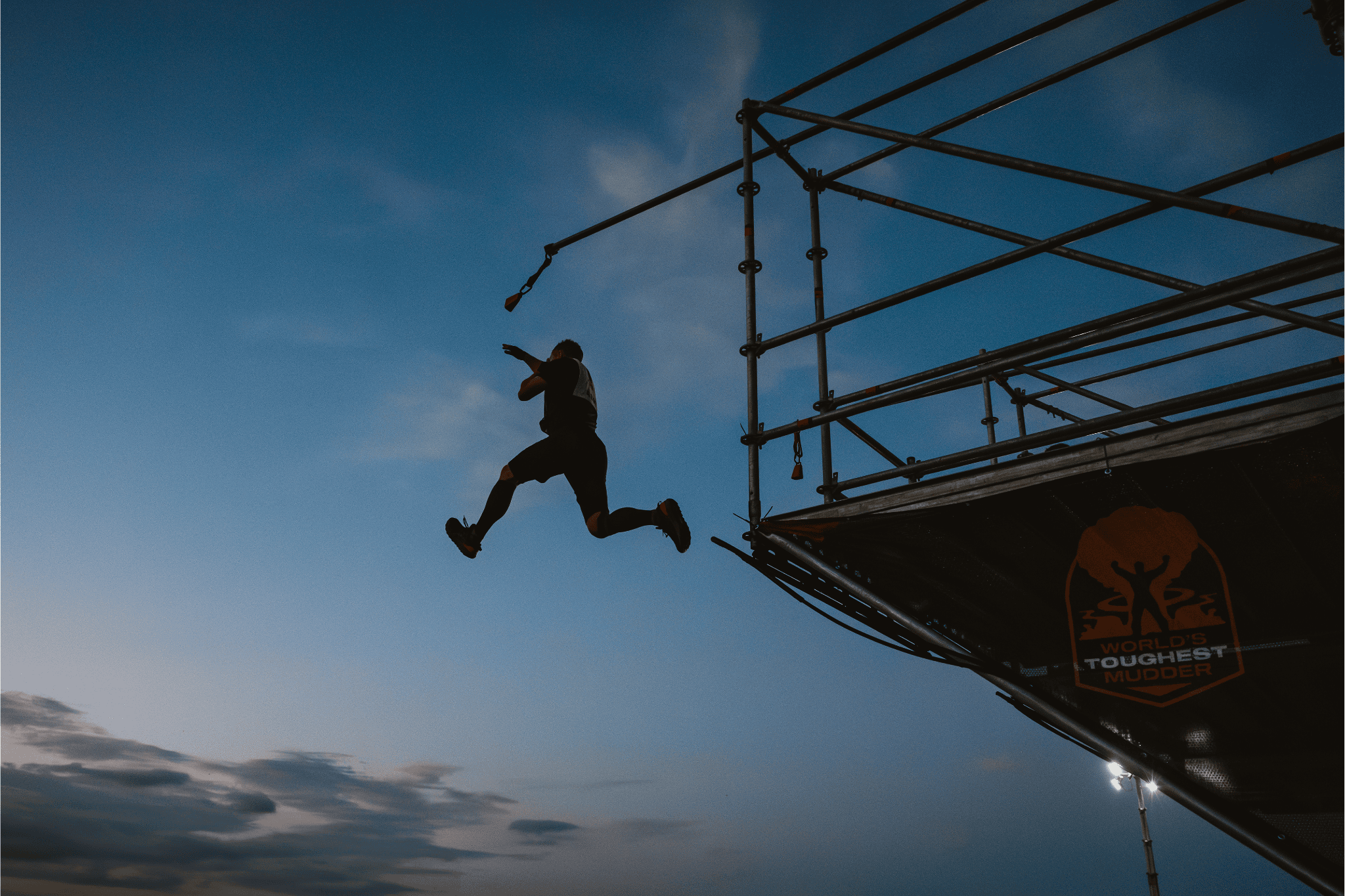
At World’s Toughest Mudder, obstacles don’t just appear out of nowhere. Each one starts as a questionable idea in a room full of people whose job is essentially to ask: how can we make this harder?
By harder, we mean harder mentally, harder physically and harder in a “why did I sign up for this” sort of way. Firefly is no exception. What started as a sketch eventually became a fully fledged obstacle designed to test nerve, strength, and your willingness to step into the dark.
Here’s how it went from idea to ignition.
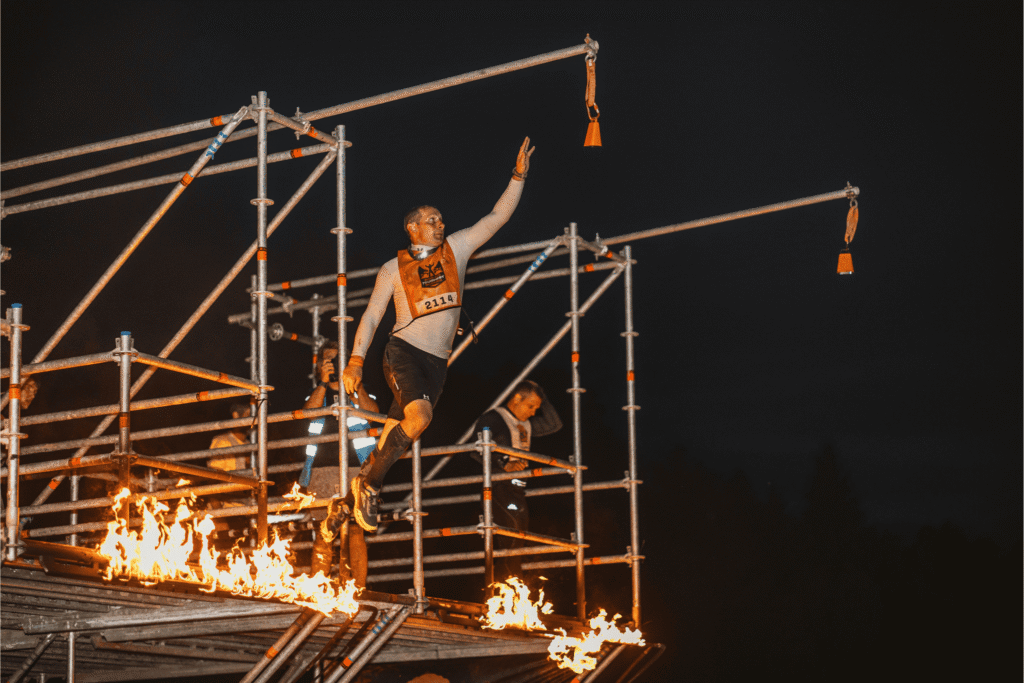
Step 1: Ideation
Every obstacle begins with a brainstorm. Think beers, whiteboards, and the Tough Mudder team trying to invent the most sadistic challenge possible. The starting point is always fear. What fears haven’t we played with recently? Heights, fire, falling, darkness, exposure. Then we look at what has worked before and how it could be twisted into something new. The aim is simple: create a challenge that tests both mental grit and physical capability, and earns its place on the toughest course in the sport.
Step 2: Obstacle Naming
Before anything gets built, it needs a name. Tough Mudder naming rules are straightforward: it has to be memorable, slightly ridiculous, and ideally contain a questionable innuendo. The process usually starts with the vision of the obstacle, followed by a rapid-fire round of increasingly inappropriate name variations until something sticks. Eventually, Firefly emerged.
Step 3: Locking the Concept
Once the idea is agreed, we focus on how participants will actually move through the obstacle. Is it primarily a fear challenge, a physical challenge, or a carefully unpleasant mix of both? We map the mechanics in detail, looking at how participants interact with the obstacle, how they traverse it, and where potential risks could occur. Every movement is considered, from the moment you step onto the platform to the moment you drop safely into the water below.
Step 4: Feasibility and Risk Assessment
Next comes the reality check. We review participant safety, insurance requirements, environmental factors, and where the obstacle can physically be built at the venue. Materials are considered, along with the space required to run it properly. We also evaluate how the obstacle will scale. World’s Toughest Mudder runs for 24 hours, so an obstacle has to handle a constant flow of participants without turning into a queue generator. Every potential risk is identified and mitigated, from fall protection to restricting movement where needed.
Step 5: Design and Engineering
With the concept locked in, the design work begins. The first version often starts as a rough mock-up drawing before engineers and construction specialists turn it into proper structural plans. We define exactly how the obstacle works and stress test the design to ensure it can handle repeated use throughout the event. For Firefly, inspiration came from the classic Walk the Plank, but with a few upgrades designed specifically for World’s Toughest Mudder.
Step 6: Construction and Testing
Test builds usually begin in our top-secret storage and warehouse facility, where the construction team can assemble and refine the obstacle before it ever sees a race course. Once we’re happy with the structure, everything is packed up and transported to the event site for the first official on-course build.
That’s where the real testing begins. We construct the first Alpha version of the obstacle on the course it’s going to debut on, giving ourselves time to test and tweak as needed. The team starts by reviewing a single participant moving through the obstacle. Once that’s working smoothly, we gather a group of very willing colleagues and test it under race conditions, with multiple people using the obstacle at the same time. This allows us to confirm that it flows properly and performs exactly as expected.
Step 7: Final Build
After testing and adjustments, the obstacle is constructed in its final form. Every structural element and safety system is inspected before finishing touches such as branding and lighting are added. Staff and volunteers are then briefed on how to operate the obstacle safely throughout the event.
Step 8: Live Event Execution
When World’s Toughest Mudder begins, the obstacle enters its final phase. Throughout the event, the team monitors how it performs in real time, tracking participant flow, safety, and overall experience. That information is reviewed after the event and helps determine whether the obstacle returns in future years, evolves further, or inspires the next idea waiting on the drawing board.
—
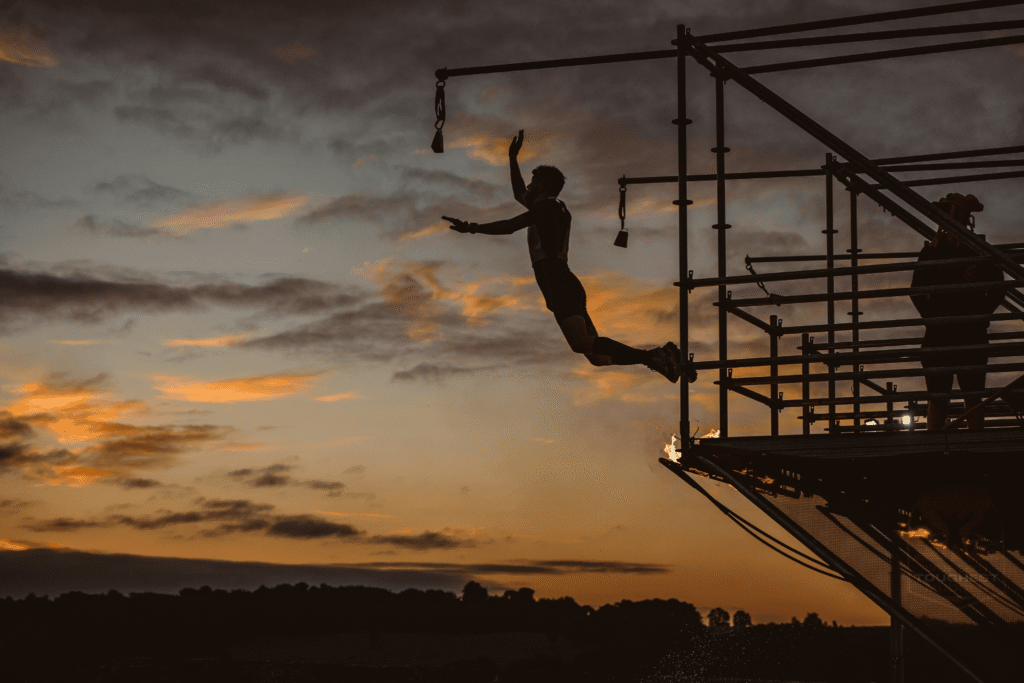
By the time an obstacle like Firefly is ready for the course, it’s already been through months of ideas, sketches, builds, and testing. Every platform, rig, and flame is designed with one goal in mind: to push your nerve and your grit when it matters most. And at World’s Toughest Mudder, those challenges don’t stop when the sun goes down. If you haven’t locked in your spot yet, consider this your sign. Sign up, step onto the start line, and see what the toughest night in obstacle racing has in store for you. Book now.